
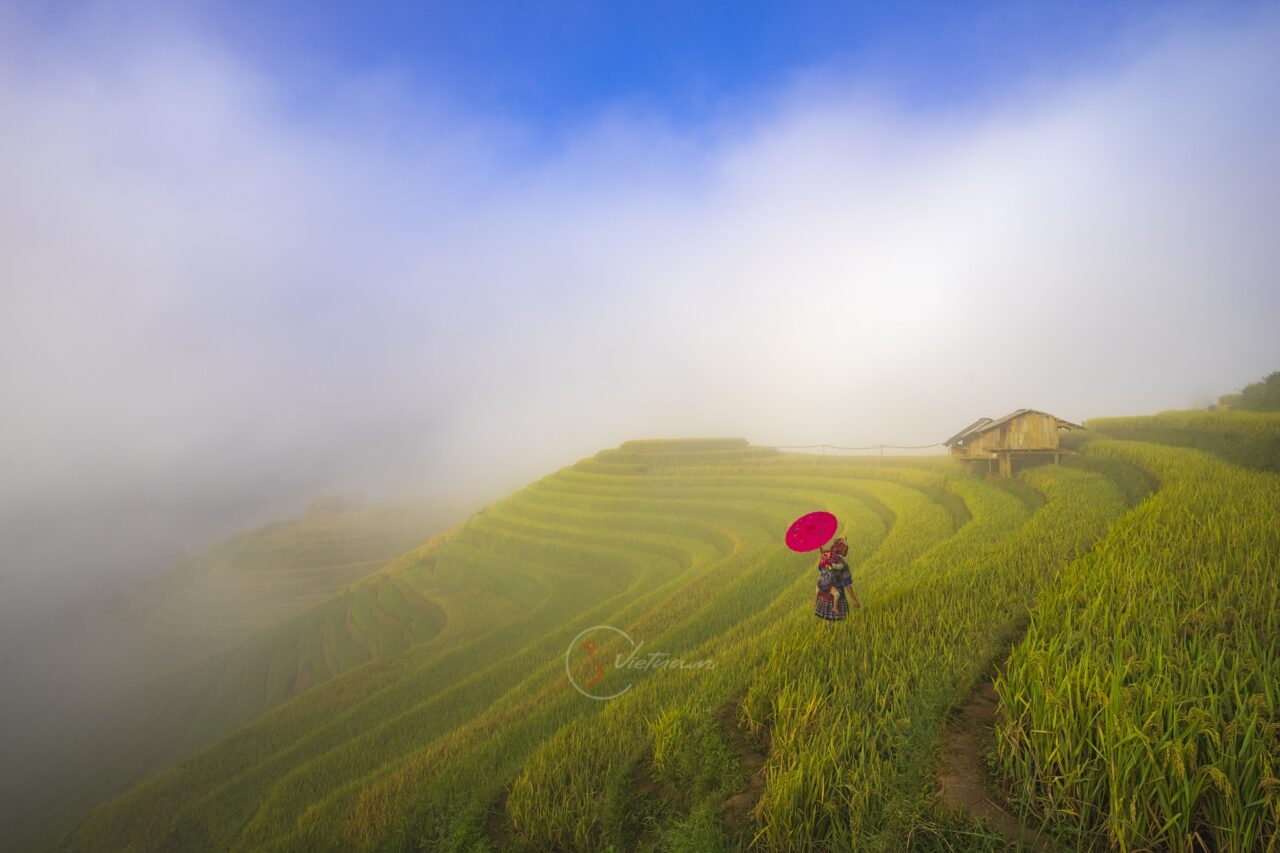
Every September, I start packing my camera bag for the same place: Mu Cang Chai. As a Vietnamese photographer who has spent more than ten years chasing light across our highlands, I can tell you — nothing else feels quite like standing on a ridge in Yen Bai at sunrise, watching golden rice terraces light up like waves of fire. If you are planning your first trip, here is everything I have learned about shooting Mu Cang Chai during the harvest season.
When to Go
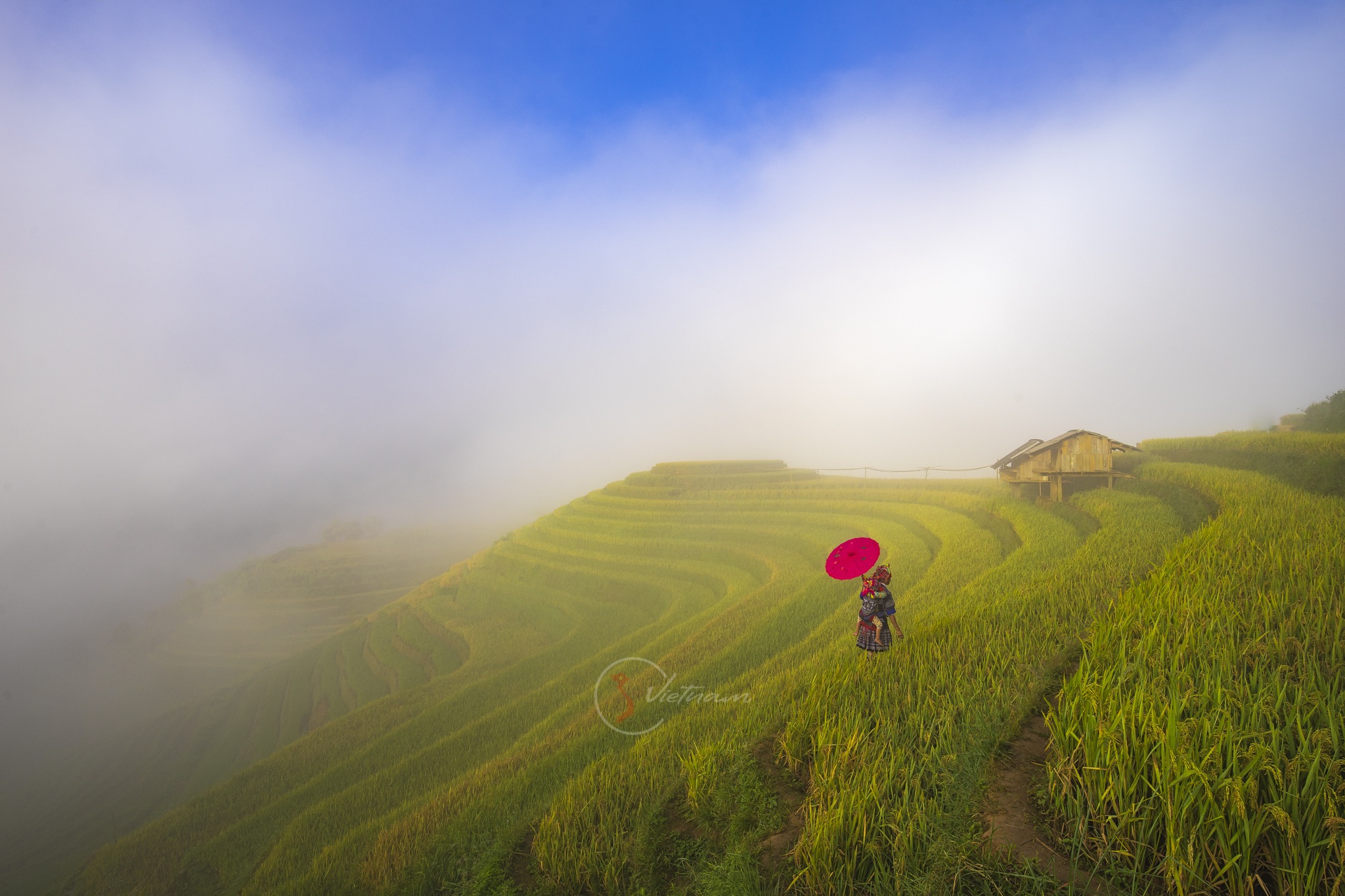
The rice harvest in Mu Cang Chai happens once a year, and the window is short. Mid-September to mid-October is the sweet spot, when the terraces turn from green to deep gold. I usually aim for the last week of September and the first ten days of October — by then most fields are golden, but a few are still being cut, so you get layers of color in a single frame.
Weather tip: bring a rain cover. The northwest has sudden afternoon showers in early autumn, but the mist that follows the rain is what makes the photos magical.
The Best Photo Spots
1. La Pan Tan — Raspberry Hill (Mam Xoi)
This is the most famous shape in Mu Cang Chai: a perfect cone of terraces that locals call Mam Xoi, or “Sticky Rice Mound.” Climb up around 5:30 a.m. to be in position before sunrise. Stand a little higher than the cone, use a 70–200mm lens, and wait for the first light to spill over the ridge. The contrast of warm light on the curves is unforgettable.
2. Khau Pha Pass
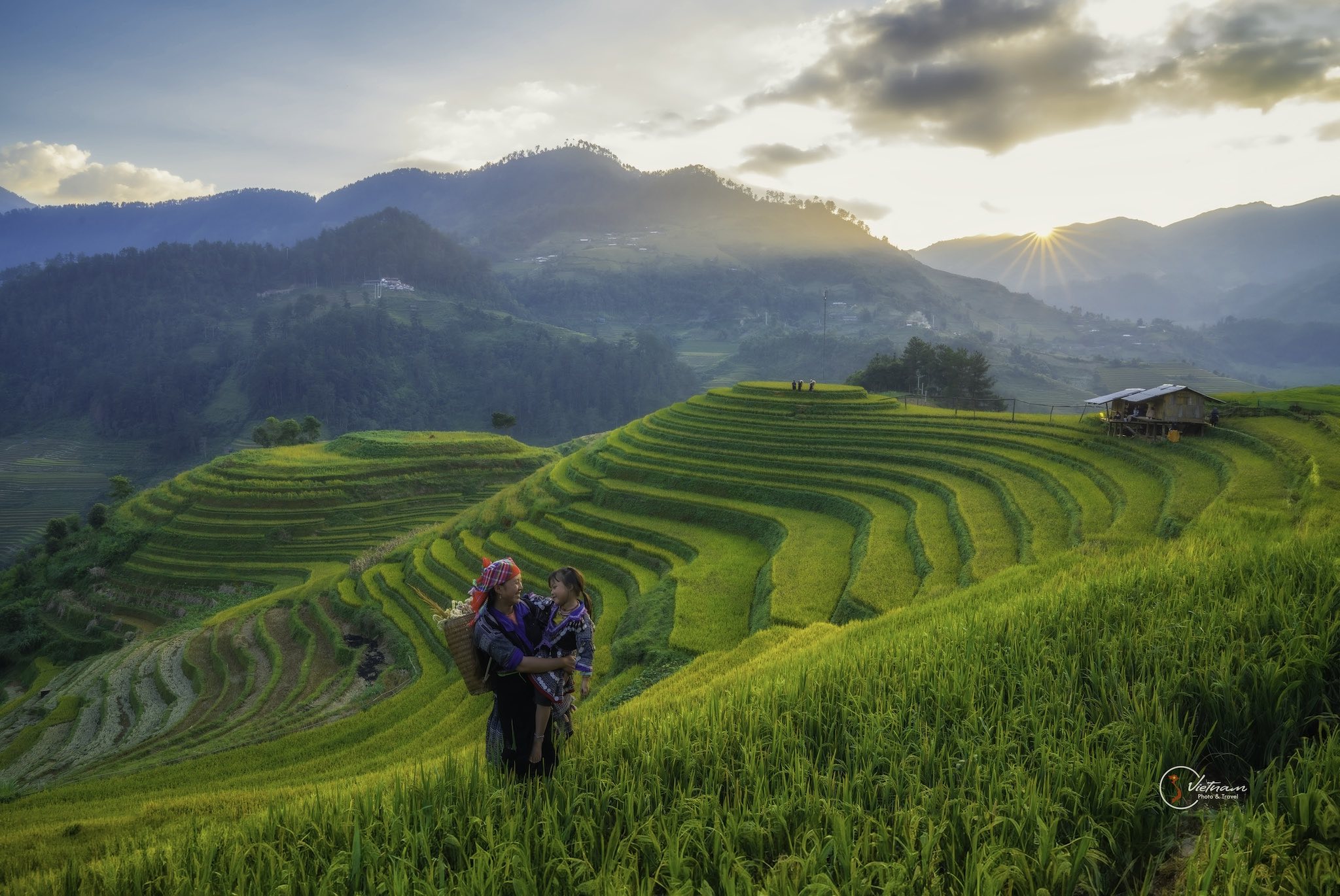
One of the four “great passes” of northern Vietnam, Khau Pha gives you a sweeping wide-angle view of the Tu Le valley. Stop at the viewpoint near Lim Mong village and shoot just after sunrise, when the valley is still filled with cloud. A 16–35mm works beautifully here. If you brought a drone, this is the place to fly it (within local rules).
3. Che Cu Nha
Quieter than La Pan Tan, but full of clean, geometric terraces stacked like staircases. I love this spot in late afternoon: side light brings out every line in the field. Look for a local farmer walking the paths — a single human figure transforms the photo from “pretty” to “story.”
4. De Xu Phinh
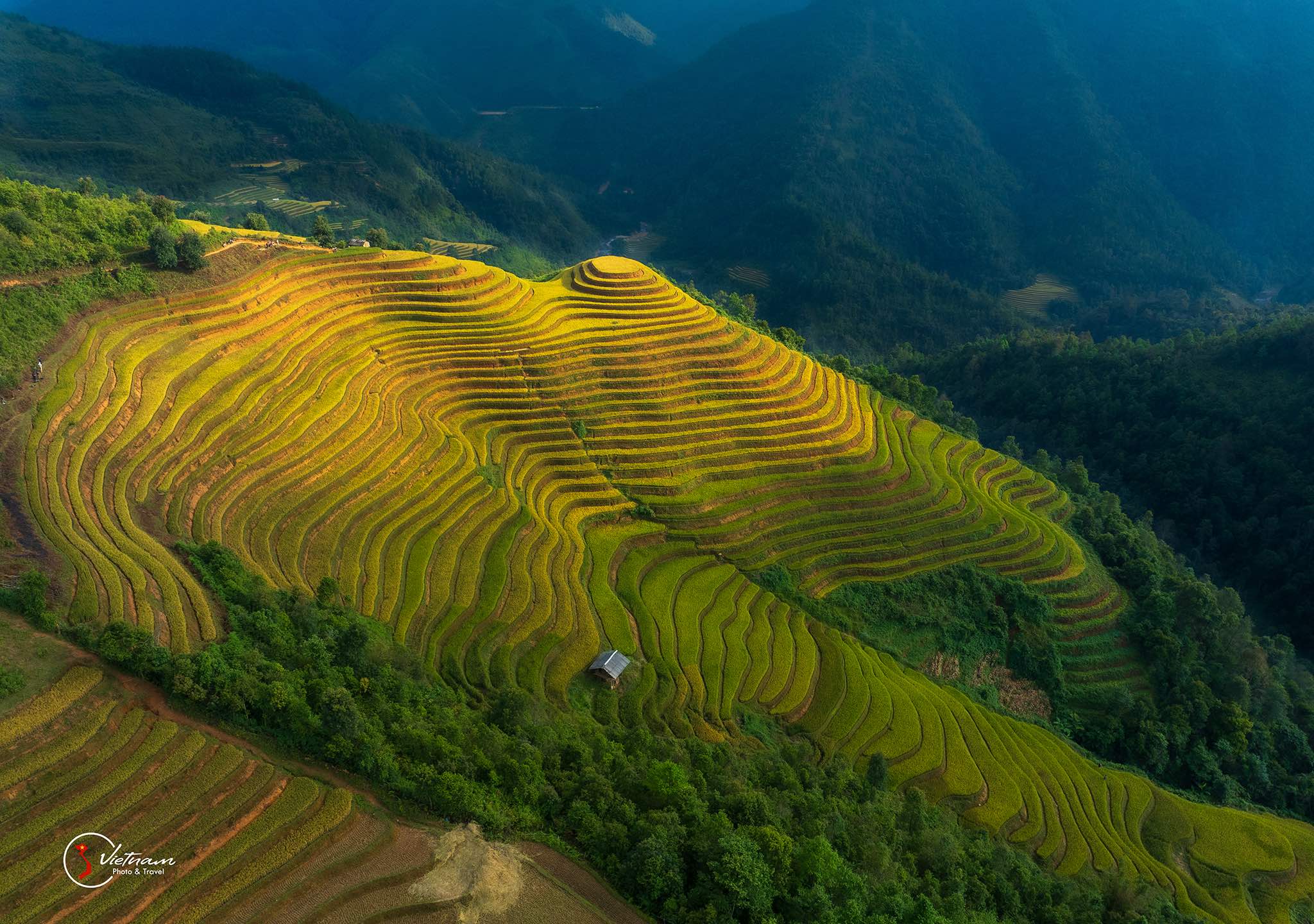
Higher and harder to reach, but worth it. The terraces here cascade down a steep slope and catch sunset light directly. If you can stay until blue hour, the cooling sky over the warm fields gives a colour contrast you cannot fake in post.
What I Pack
- Two camera bodies — one with a wide lens, one with a tele, so I do not change lenses in the dust.
- 16–35mm for sweeping valleys, 70–200mm for compressing the terrace layers, 50mm for portraits of farmers and children.
- CPL filter — reduces glare on wet rice fields and saturates the gold.
- ND filter for long exposures of mist drifting through the valley.
- Sturdy tripod — golden hour and blue hour are too short to handhold.
- Drone (DJI Mini or Mavic) — register it in Vietnam beforehand and respect village privacy.
- Headlamp, rain cover, microfiber cloths, and spare batteries — the cold drains batteries fast at altitude.
Timing the Light
Mu Cang Chai is a sunrise destination. The valleys face east, and mist usually lifts between 6:00 and 7:30 a.m. By 9 a.m. the light gets flat. I rest in the afternoon and head back out around 4:30 p.m. for golden hour, then stay for blue hour. Twenty minutes of patience after the sun is gone is when I get my favourite shots.
Working with the Local People
Mu Cang Chai is home mainly to the Hmong and Thai communities. They are warm, curious, and generous — but always ask before you photograph. A smile, a few Vietnamese words (“xin chào”, “cảm ơn”), and showing them the photo on your screen go a long way. If you promise to send a print, please actually send it. I bring a small instant camera and give portraits as gifts; it has opened more doors than any lens.
How to Get There
From Hanoi, Mu Cang Chai is about 280 km away, around 6 to 7 hours by car. Most photographers I know hire a private car and driver — it lets you stop at every bend on Khau Pha Pass. Adventurous travellers ride motorbikes, which is unforgettable but demands real experience on mountain roads. I always recommend staying three nights minimum: one night in Tu Le, two in Mu Cang Chai town.
Final Thoughts
The rice harvest in Mu Cang Chai is a short, beautiful chapter in our year. Every season the terraces look slightly different — the timing shifts, the mist behaves differently, a new path opens between the fields. That is why I keep coming back. Bring patience, bring respect, and bring a little extra space on your memory cards. You will need it.
If you would like to join one of our small-group photo tours to Mu Cang Chai during harvest, our team designs custom itineraries with local guides and the best viewpoints already scouted. See our Photo Tours or get in touch — we would love to show you the highlands through our lens.